

I am a nerd. Truly. Just ask my wife. For some strange reason I love thinking about (and talking about) heat transfer and the mechanical systems associated with it. My favorite class in college? Thermodynamics. I found it fascinating to learn how and why heat goes from here to there, why some things hold onto it and others don’t.
The good news for you is that my wife has pleaded with me to keep it simple and relatable here. So here goes.
If comfort is your main goal, go with radiant floors
There are multiple ways to heat a house, all with differing pros and cons. A simple breakdown would look like this:
- Furnace. What is it? A fan blows air through metal coils that are heated with fire from burning gas. Pros: cheap upfront cost. Cons: Inefficient. Dries your skin. Blows dirt and dust through the house. Only warms the air, not objects like floors, walls, chairs, etc. Does not heat the house evenly. My take?Furnaces are only popular because 1) they are so cheap and 2) a lot of HVAC companies are old school and not up-to-date on the latest heating tech. Imagine if car companies were still producing cars with 1970s specs. That’s what a furnace is. That’s also why Marigold Spaces do not use them.
- Heat Pump. What is it? A magic box takes heat from the cold outside air (you read that right) and dumps it into your inside air. All electric. No gas. Pros: Much more efficient than a furnace. Does not dry your skin as much as a furnace. Cons: Still uses blown air, which only heats the air and is not as comfortable as radiant heat. My take? Heat pumps are a good step forward from furnaces, especially if you use high-end heat pumps like mini-splits (more on that below).
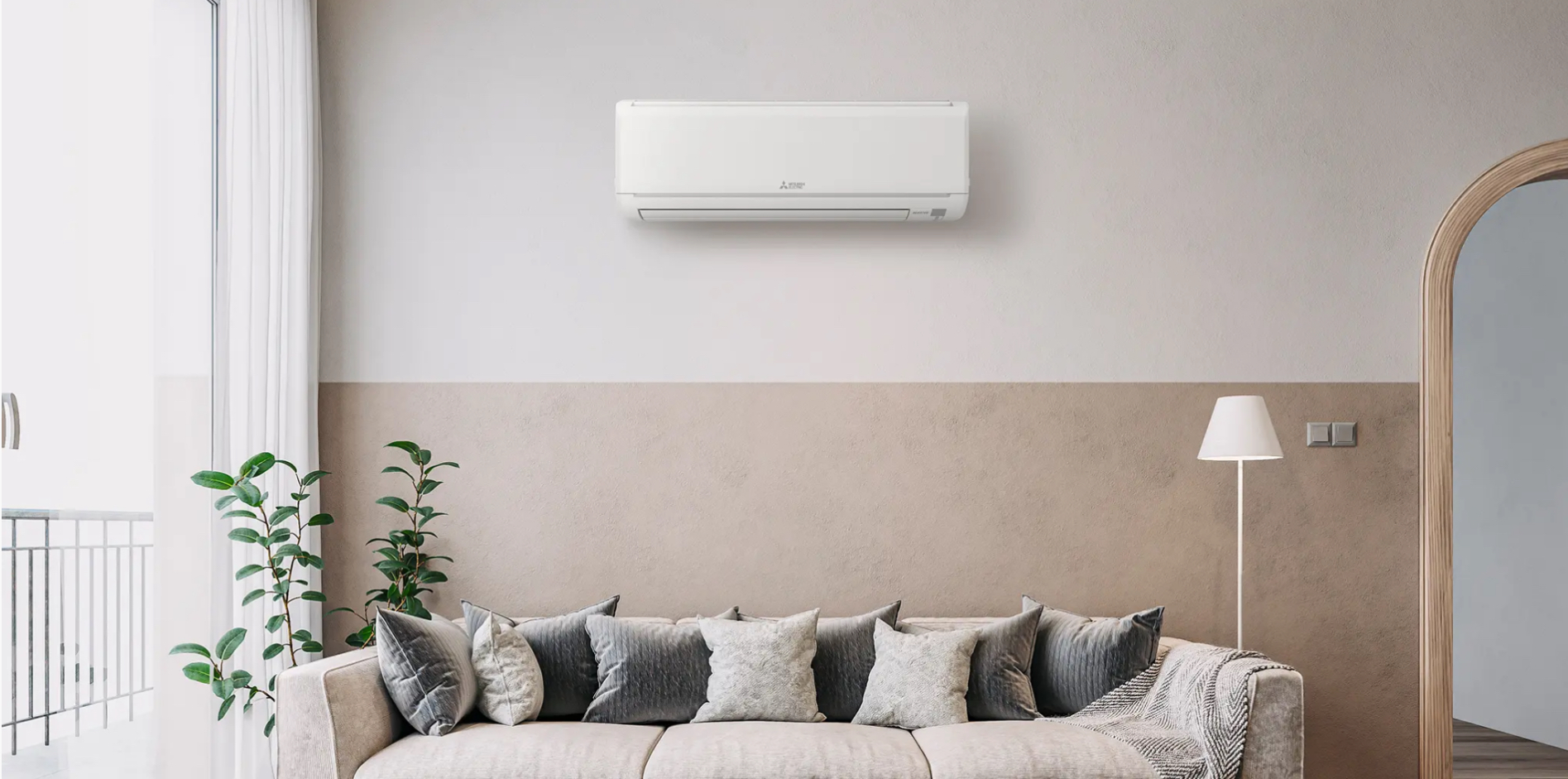
- Mini-Split Heat Pump: What is it? If you’ve been to Europe or Asia (and many other places around the world), you’ve undoubtedly seen the wall-mounted heating & cooling units called mini-splits. They are a heat pump that has been miniaturized so that they can be installed in different rooms throughout the house. Pros: Very energy efficient. Can heat different rooms to different set points, making a house much more evenly heated. Cons: They are expensive. Some people don’t like the aesthetics. My take? Since mini-splits can work as both heating and air conditioning, they are a great way to get a “free” energy efficient heater when you buy one for its cooling capabilities. That’s why Marigold offers them as an option. It’s still blown air, though, which is not quite as comfortable as…
- Radiant Floors. What is it? As you probably guessed, floors that are warmed using either electricity or warm water pipes. In a well-insulated structure, they can be used as the main heating source for the home. Pros: Unquestionably the most comfortable of all the heating options. They disperse the heat evenly throughout the space, heating the objects in the room (like walls), not just the air. They are also pretty efficient, as long as the floors are well-insulated. Cons: Not quite as energy efficient as radiant ceiling panels (more on that below). My take? If comfort is your main goal, go with radiant floors. Because of this, they come standard in Marigold Spaces.
- Radiant Ceiling Panels. What are they? Big flat panels (about the size of a large framed poster) that are attached to the ceiling and are heated electrically. Pros: The most energy efficient heating option. Radiant warmth that comes from above you, similar to the feeling of sitting in the sun. Evenly distributes heat. Cons: Not quite as comfortable as radiant floors (nothing is). My take: Radiant ceiling panels are perfect either for off-grid spaces that need to be as energy-efficient as possible or for the ultimate heating luxury when coupled with radiant floors (imagine warm, toasty feet and the feeling of sunshine above you).


Leave a comment